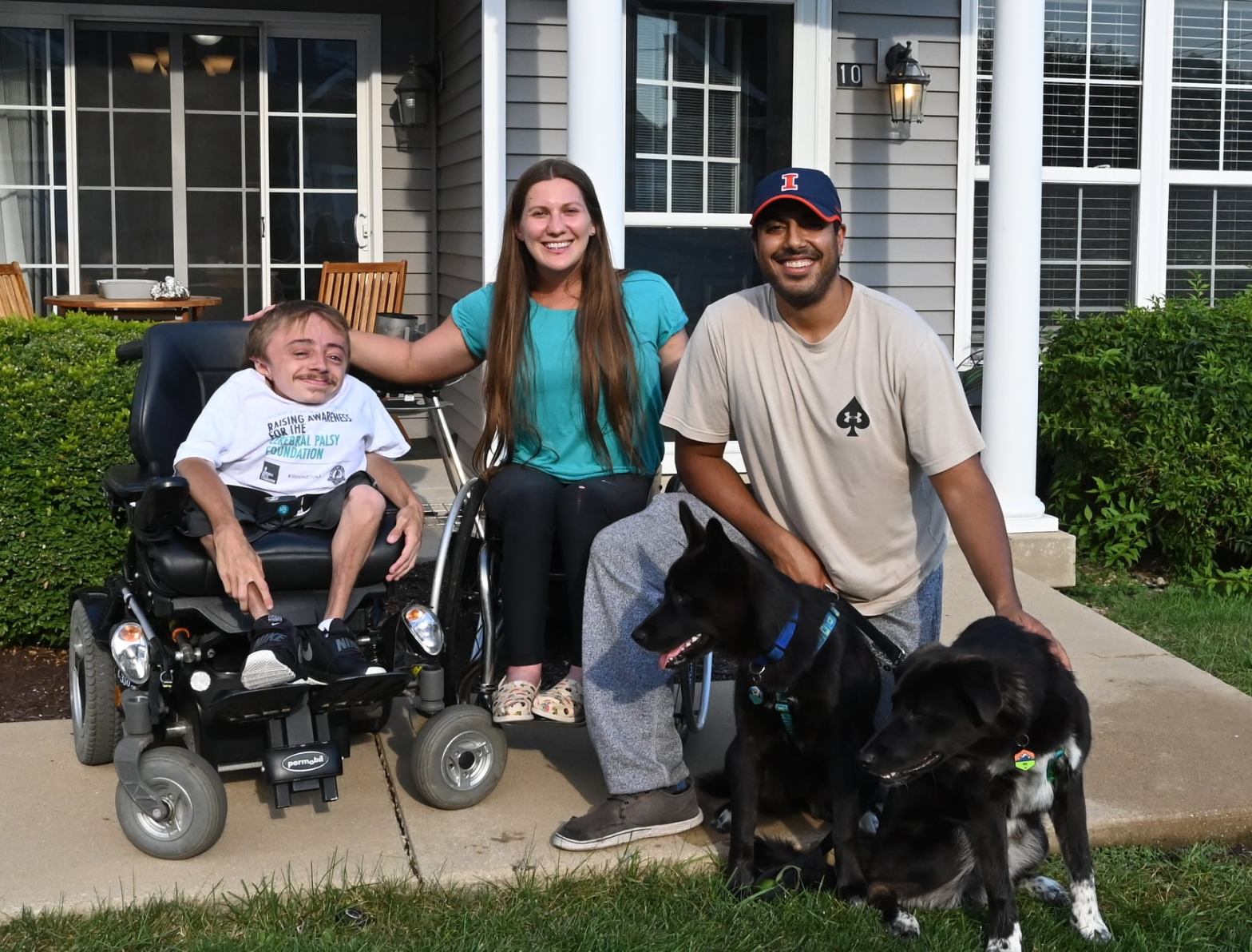
I grew up in a town of about 4,000 people in central Illinois. There were cornfields for miles.
But as I saw the corn, I rarely saw anyone with a disability like mine, Osteogenesis Imperfecta (OI), or brittle bones.
Sure, I saw kids with my disability on TV. They were always cast as the sad stories, stuck in the hospitals, wrapped in bandages like a mummy, and seemingly stuck there forever.
I never saw or heard of any organization that actually showed the realities of living with a disability. In other words, I never saw kids in wheelchairs playing basketball; folks with OI outside the hospital; or really anybody with any disability doing amazing things.
Until I came across the University of Illinois.
When it came time to pick a college, I knew Illinois had a wheelchair basketball program. I figured, maybe, just maybe I could catch a glimpse of what I thought was basketball for people with special needs.
I did quite a bit of research into Illinois, and I finally came across photos and articles of the school’s adaptive sports program. They had basketball, AND they had wheelchair racing.
“Wheelchair racing?” I thought. “I’ve only raced people for fun, but there’s an actual sport of wheelchair racing? Awesome!”
Many of the world’s greatest racers trained at Illinois, and it was remarkable. That, though, was only half the story.
Once I became a student at Illinois, I immediately immersed myself in the adaptive sports world. I went to as many wheelchair basketball games as I could, and I interviewed several of the wheelchair racers for the school newspaper.
I immediately realized many of my preconceived notions about the athletes — what I was learning about these athletes from the marketing — were wrong.
They were not invincible.
They had lives outside sports.
And they were not all that different from me.
Yes, as a kid, I wanted to see people in chairs playing basketball and winning. I don’t think, deep down, that’s what I needed. I needed some sort of personal connection with a person who shared experiences like my own.
People without disabilities just can’t relate to not being able to enter a building because of my wheelchair … the wheelchair racers and basketball players can.
This is the true power of stories. They create understanding and human connections.
So many videos emphasize only what programs an organization offers. Like an overview-type video, we catch glimpses of basketball games, baseball and whatever else they do.
We don’t hear authentic human stories of just how beneficial those programs are. We’re also missing anecdotes about the human transformation that happened, a before-and-after synopsis.
For my racing friends, we see them flexing in TV commercials, and we’re told how fast and successful they are. But we don’t see that racing has allowed these athletes to travel the world and challenge everyone’s expectations about the disability community.
That’s where the connection with your audience lies, in the heart of a story.
I expand on this story of mine in my Video Marketing Guide. It’s free, and I’ll give you several tips on how to make your videos so much better right now.